

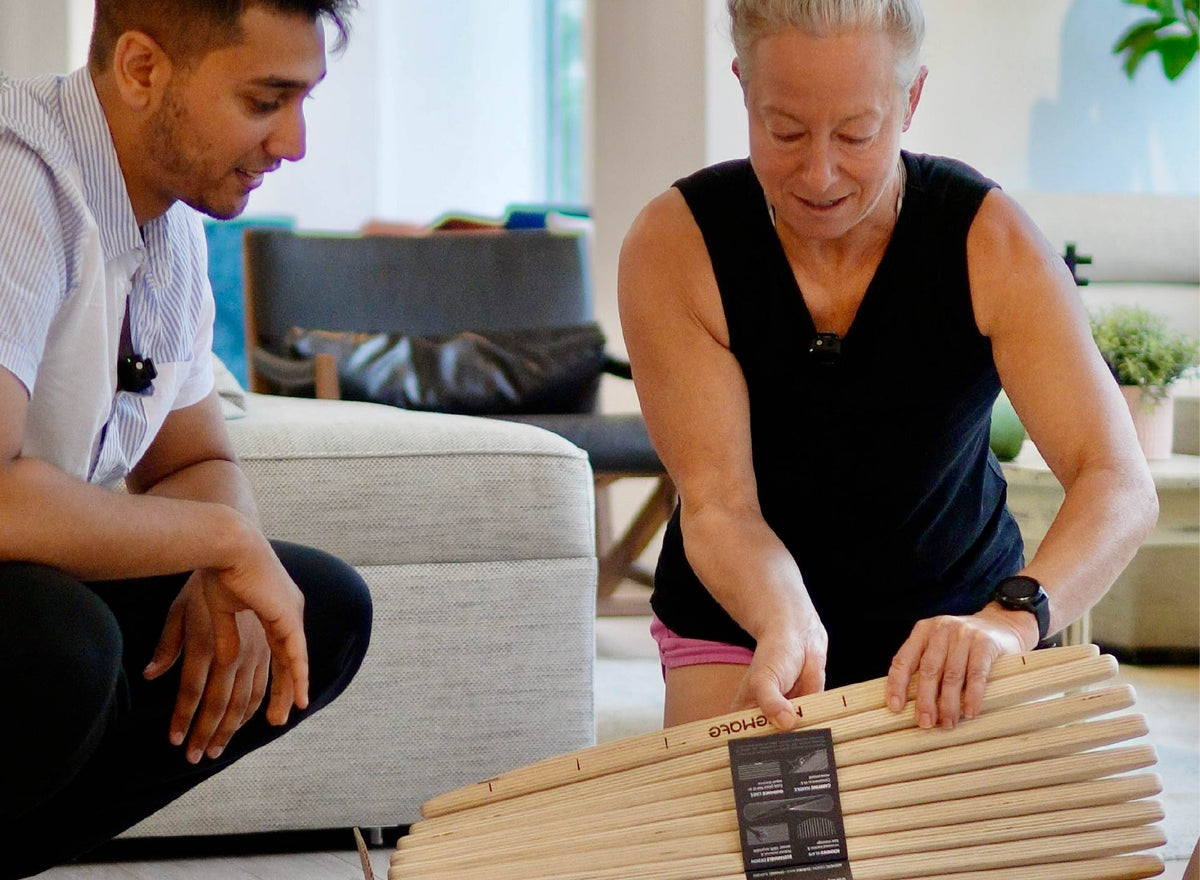
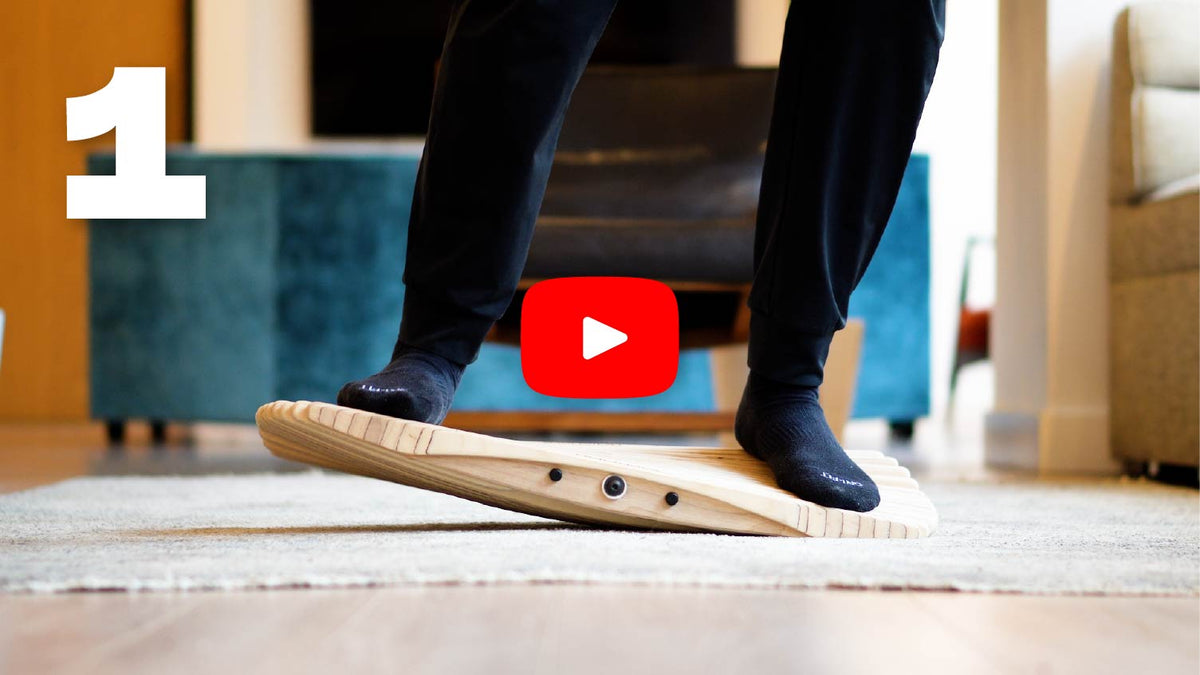
Start with this 5-part series, in order, to learn how to move on the board, key features, what to expect and how to make it a natural part of your day


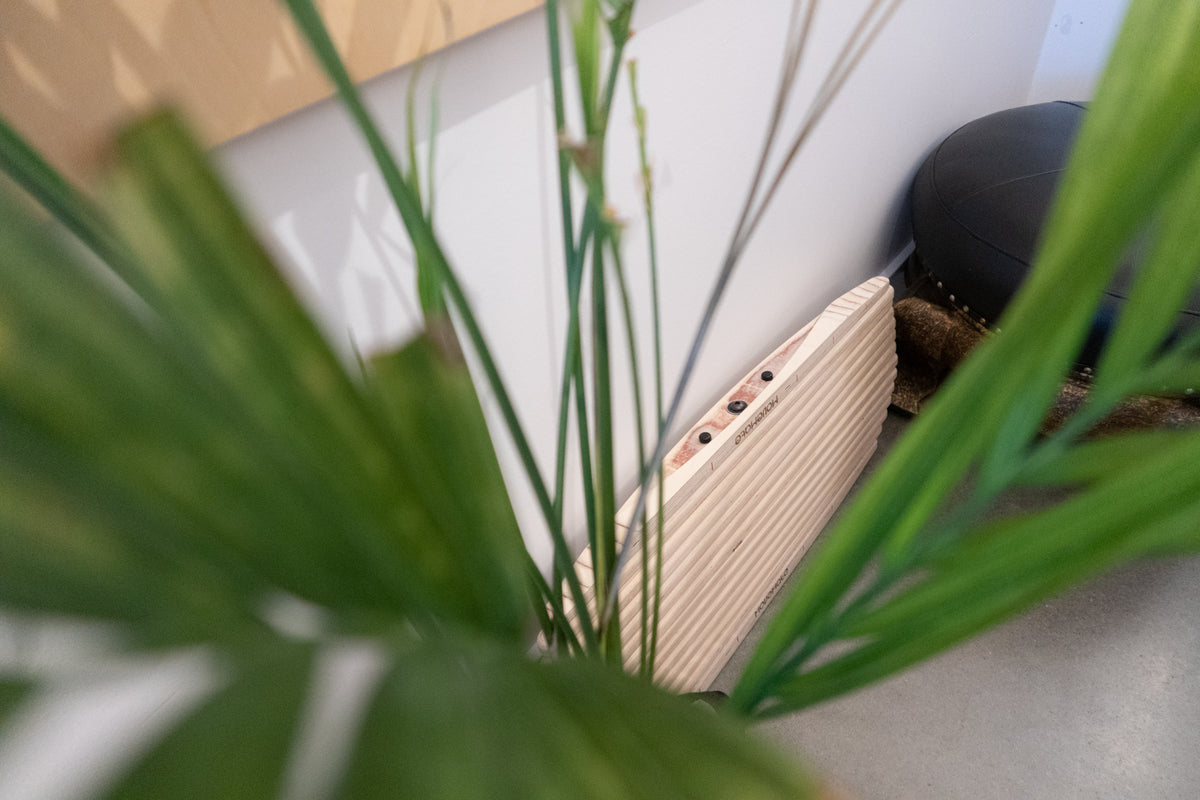
Positioning the board
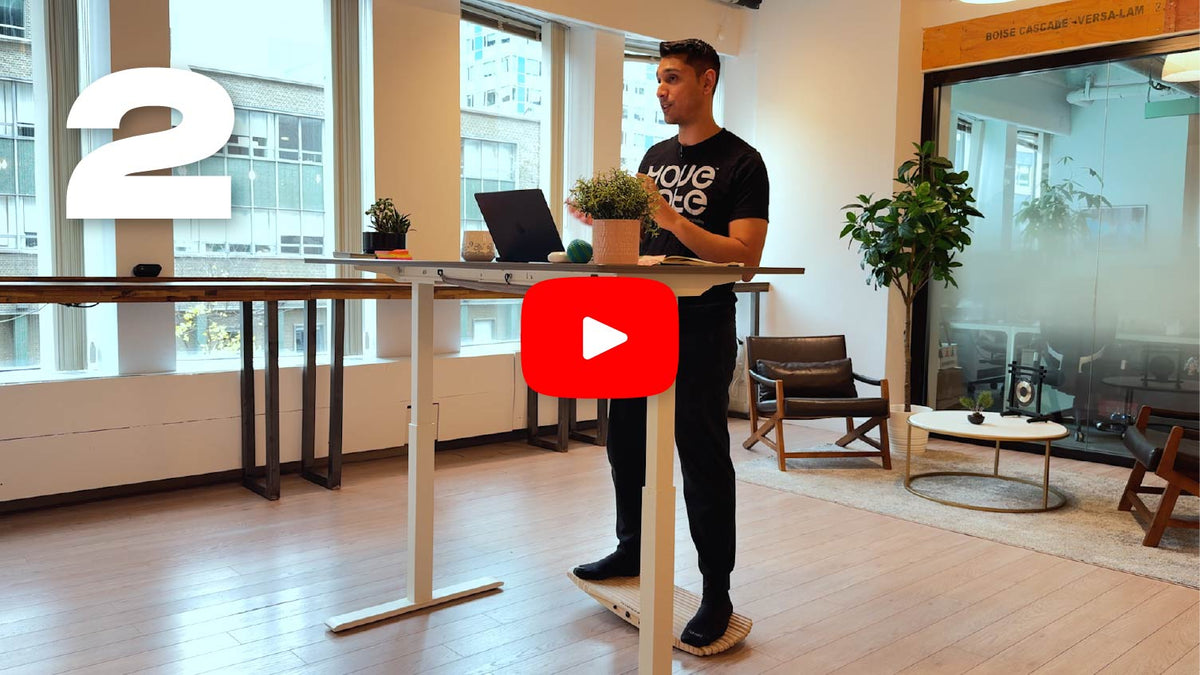
Place Movemate parallel to your desk, centred in front of your screen and keyboard. Leave enough clear space around it to move freely.
💡 Position it so you can reach your keyboard without leaning forward.
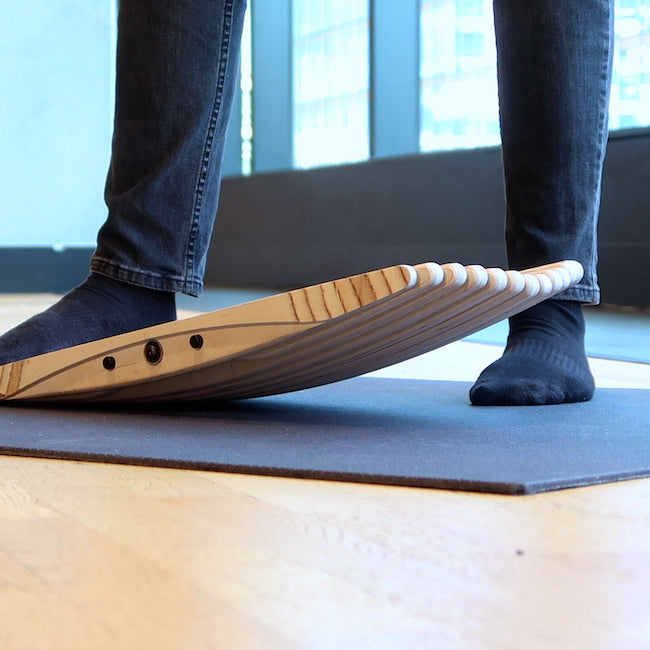
Flooring and footwear
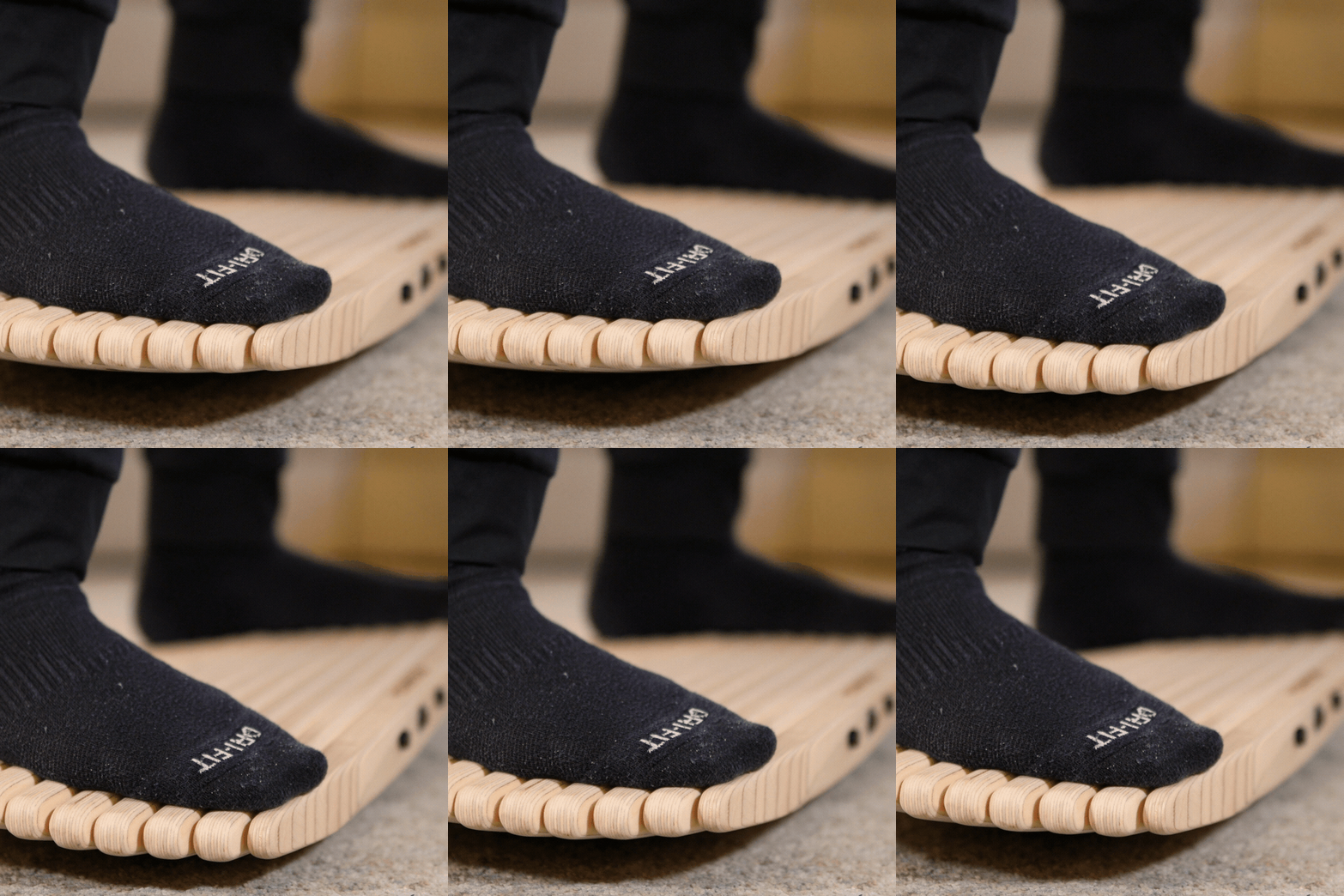
Choose a flat surface clear of debris. Movemate works with shoes, socks or bare feet. Firmer flooring allows more movement, especially when twisting.
💡 Try socks or bare feet to feel the slats move beneath you.
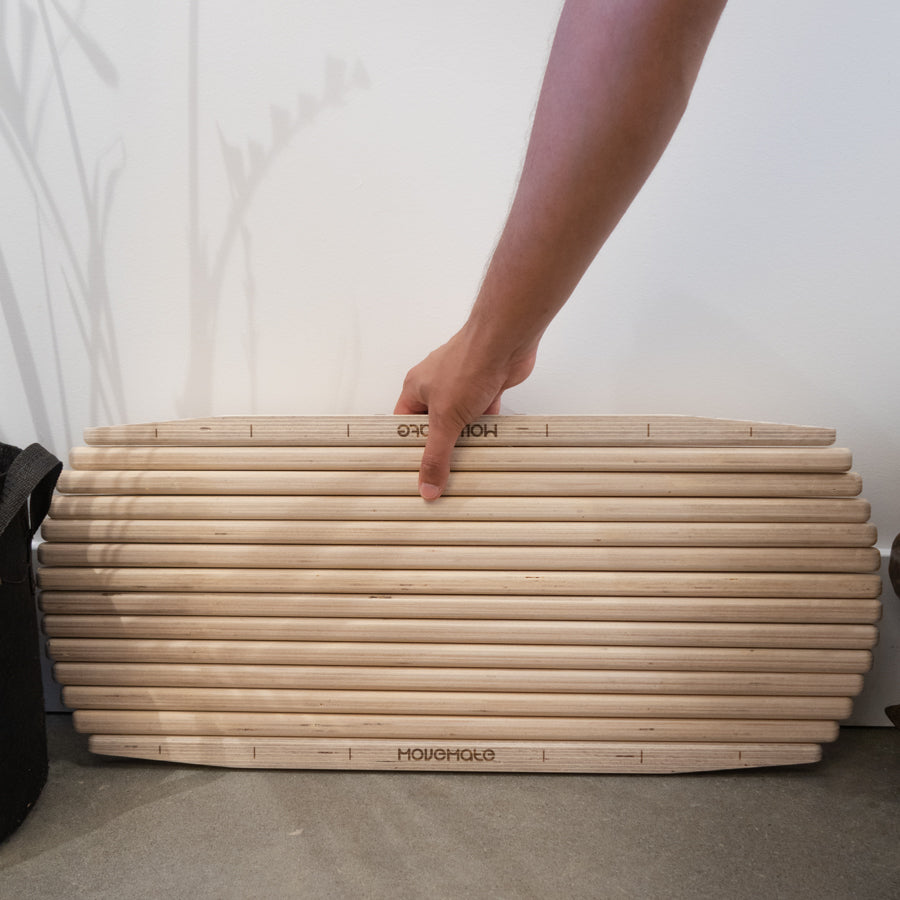
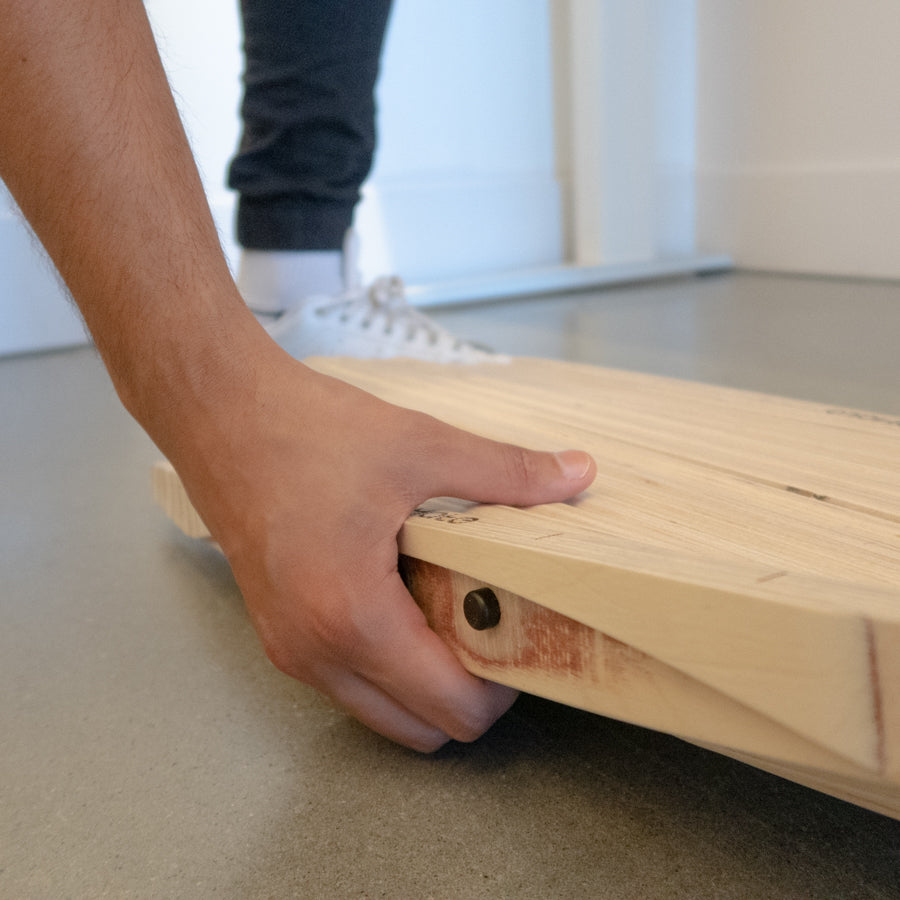
Lifting and storing
Lift Movemate using the built-in handles. When you’re finished, tuck it under or beside your desk, or rest it against a wall.
💡 When underneath your desk, it doubles as a footrest or fidget to keep you moving while steated.

💡 Movemate adapts to the natural motion of your lower legs. It's less balancing and more fluid movement. Be loose and allow your body to flow.
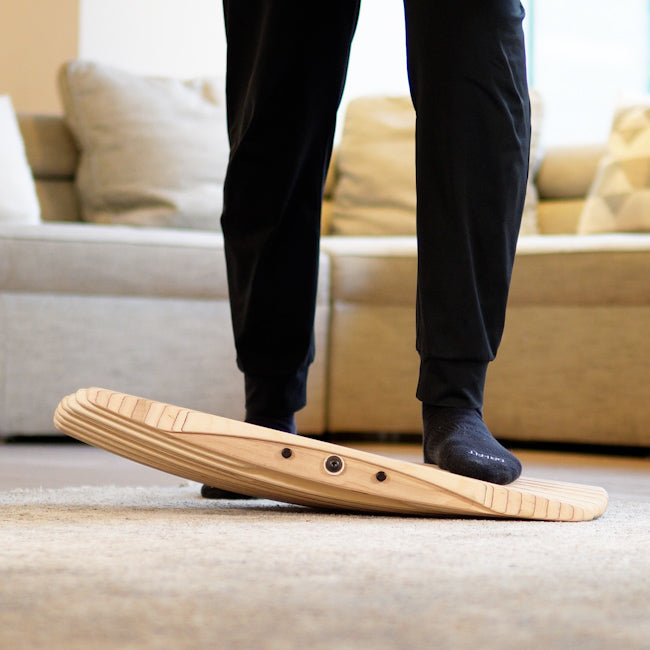
Positioning the board
Step onto one side of the board.
💡 Plant foot firmly to feel the ground.
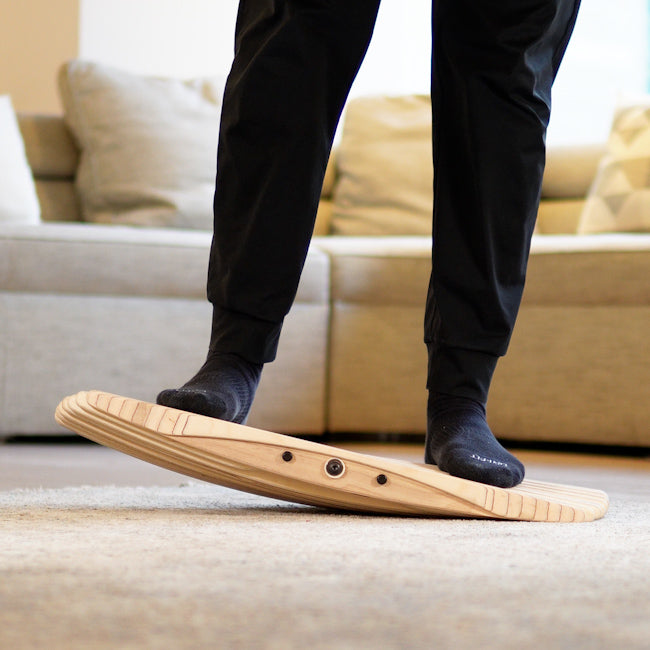
Flooring and footwear
Step onto the other side of the board.
💡 Maintain shoulder-width distance.
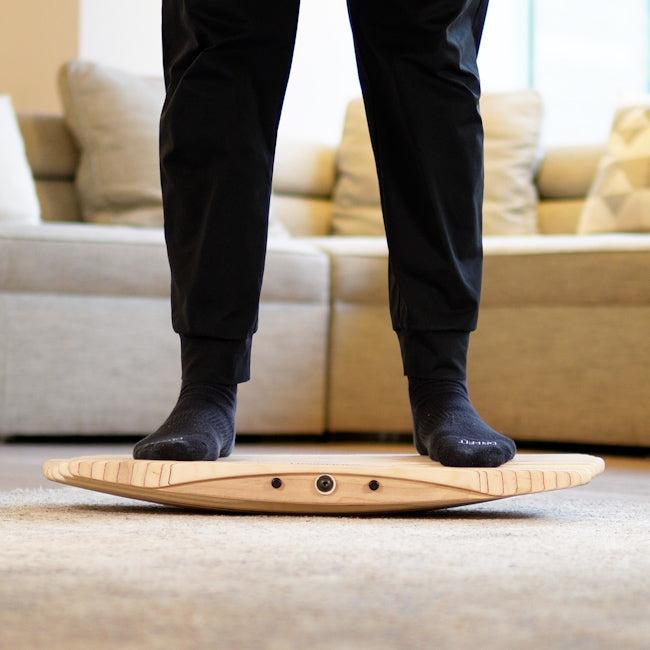
Find neutral balance
Tilt the board into a neutral stance.
💡 Apply equal pressure with both feet.
5 foundational moves
Let's get the basics and then try some combination moves
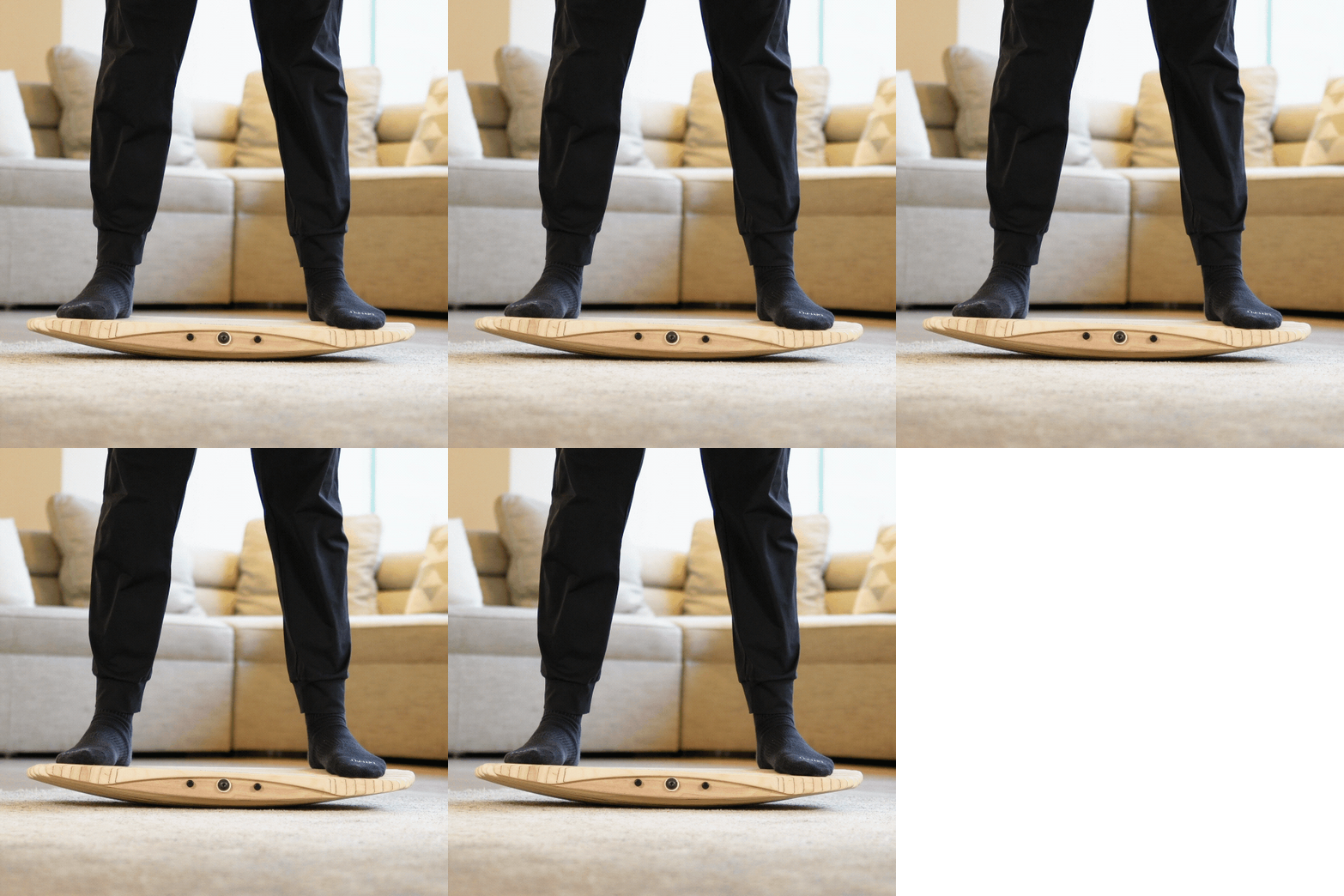
Stand
Place your feet shoulder-width apart and spread your weight evenly between them, keeping the board level.
💡 If one side dips, shift some weight towards the other.
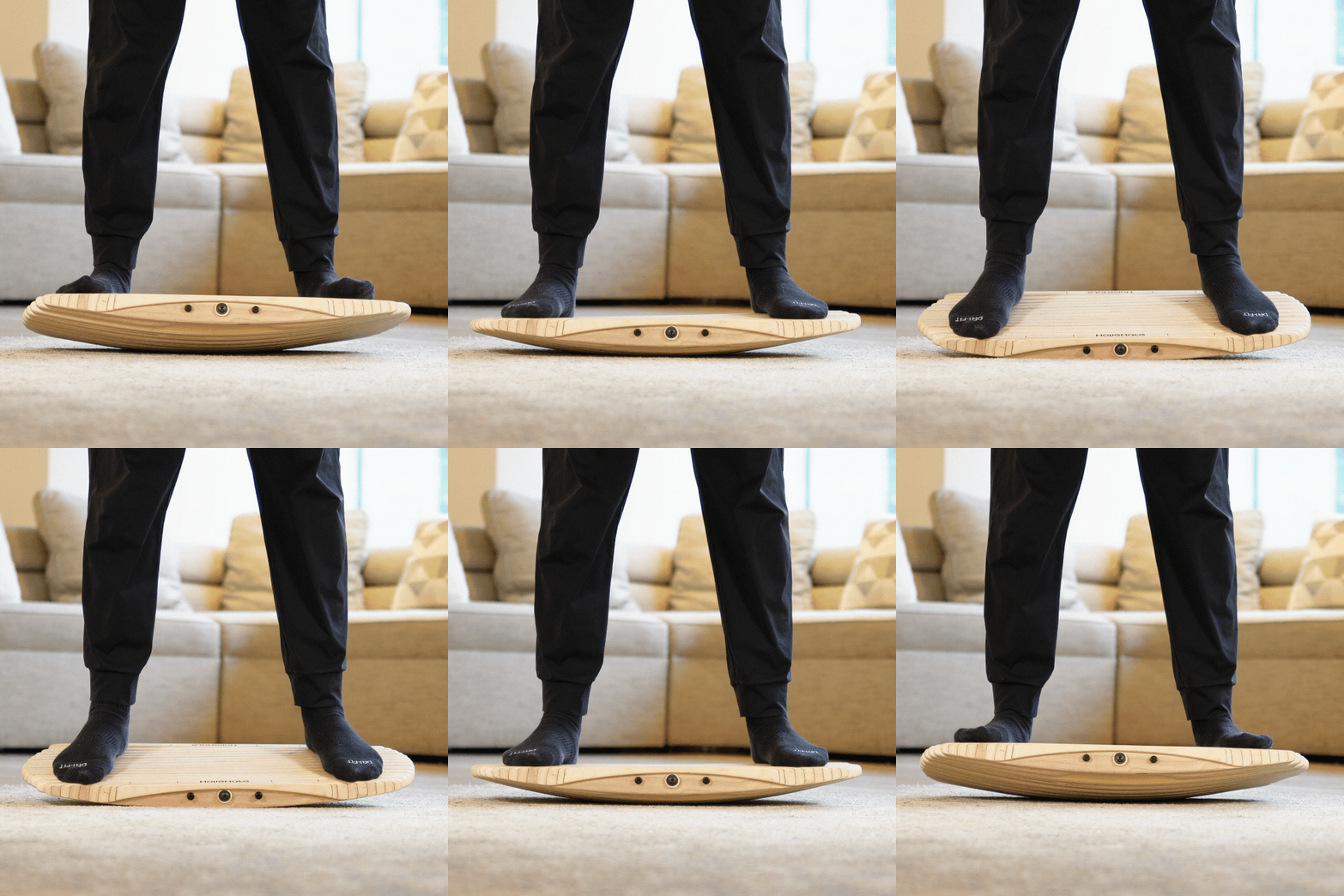
Swing
Slowly shift your weight from one foot to the other, letting the board tilt sideways as your body follows along.
💡 Move your feet wider apart for more range of motion.
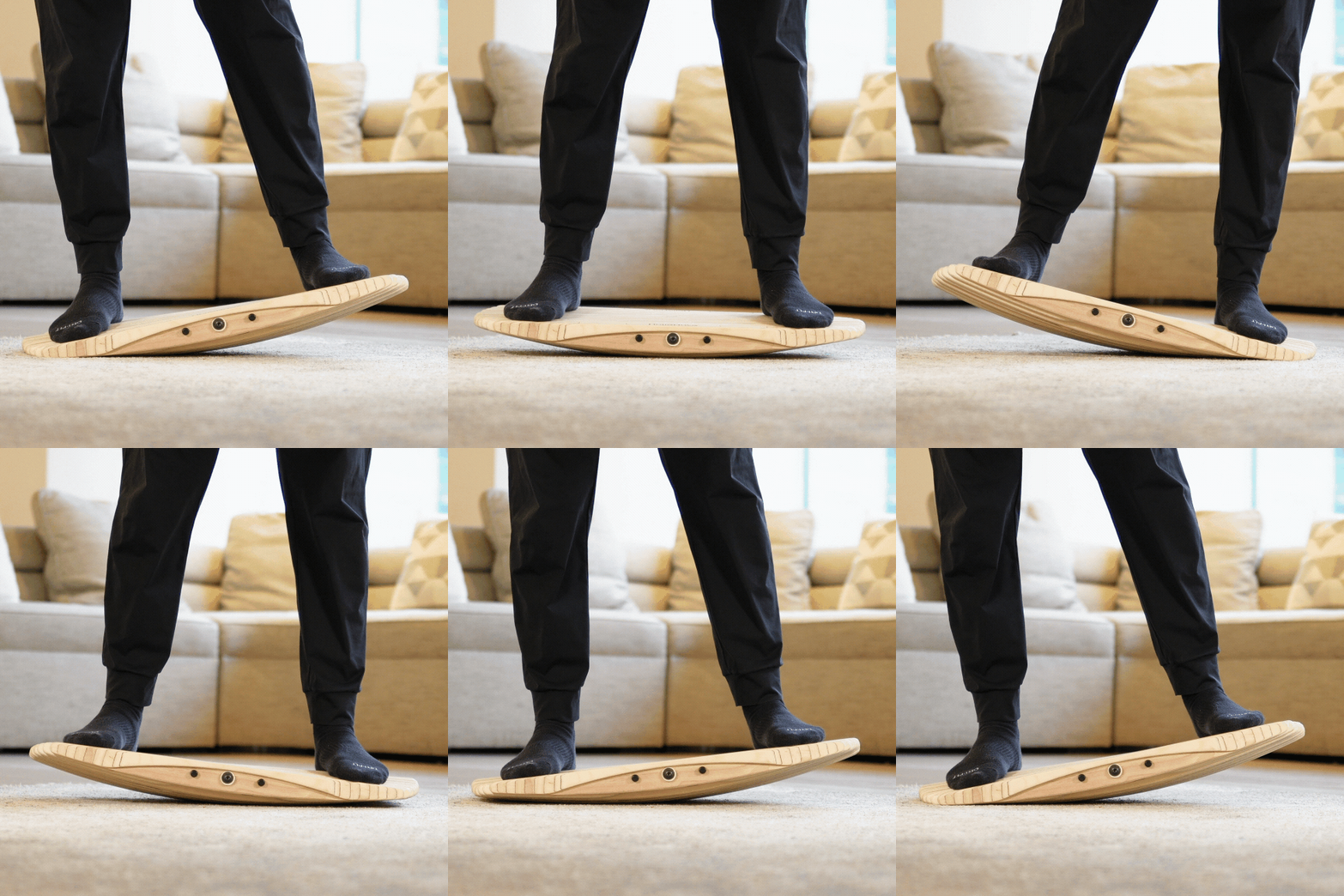
Rock
Gently shift your weight between your heels and the balls of your feet, letting the board tilt forward and back.
💡 Bend your knees slightly if you need some extra control.
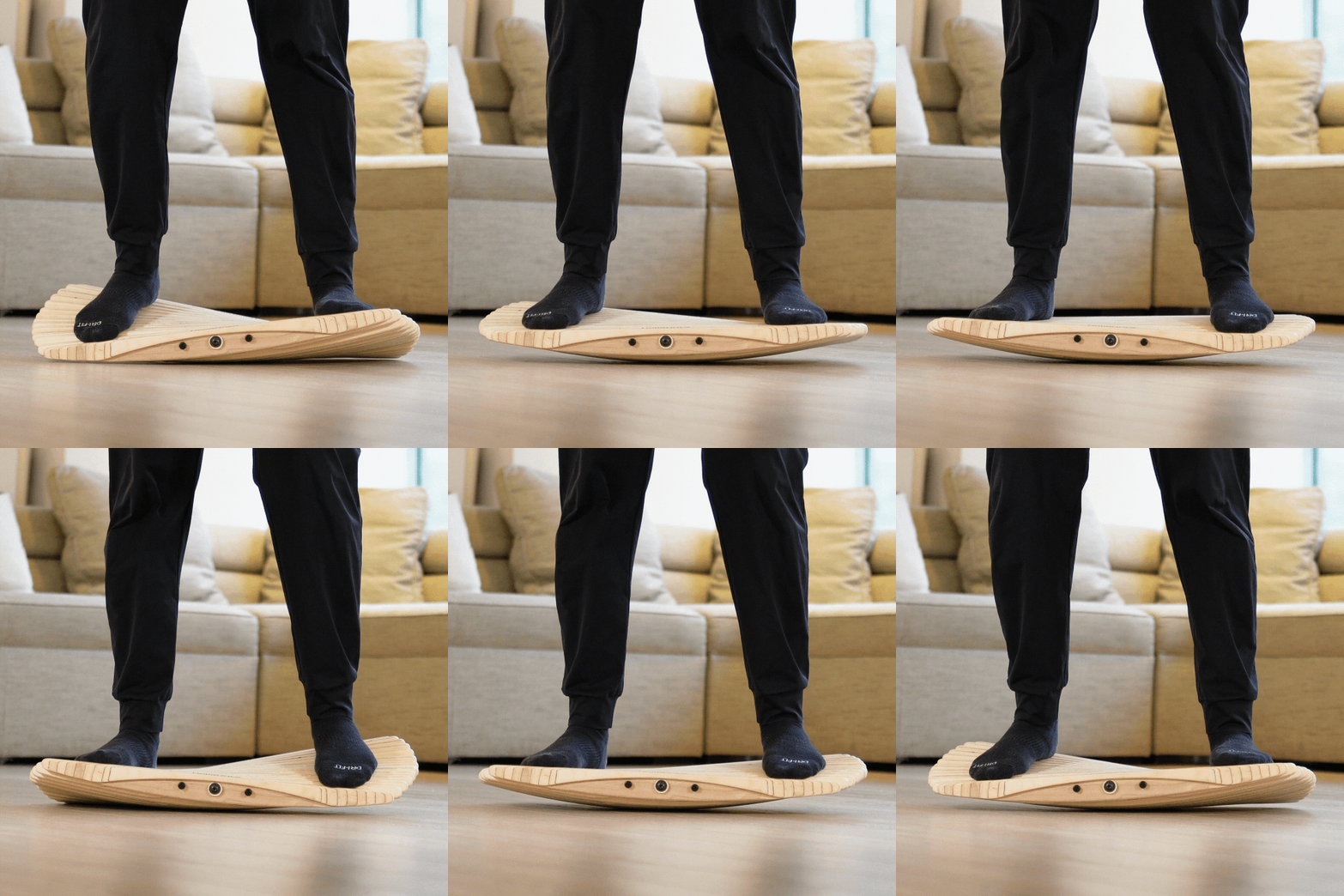
Flex
Gently push one foot forward while letting the other move back, allowing your ankles to flex. Then reverse the movement.
💡 Use the ankles forward slightly to amplify marching motion.
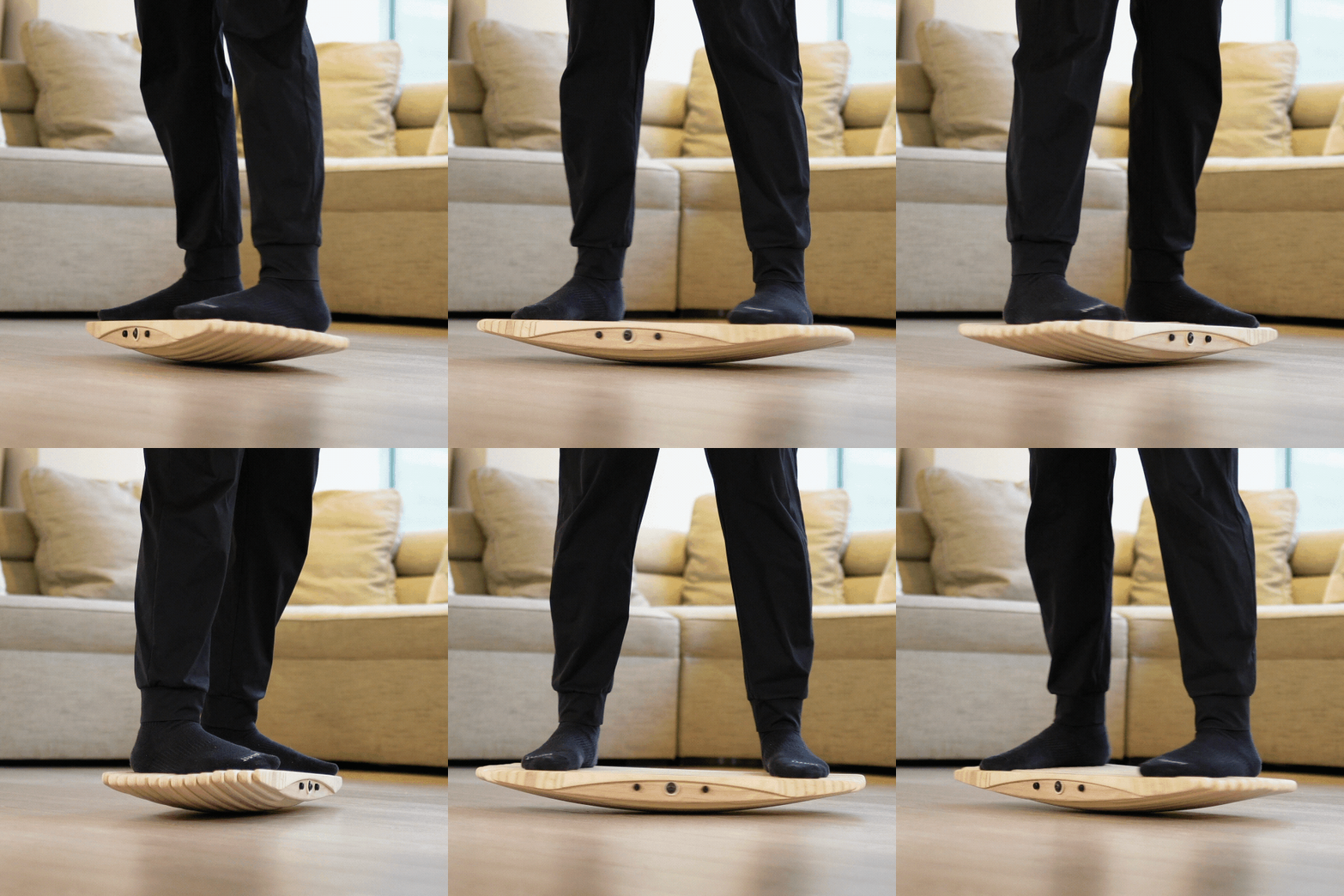
Twist
Turn your upper body slowly, letting your hips and legs to follow along. Return through the centre and change direction.
💡 Hold a desk or swing arms in the opposit direction to help.
Combination moves
Here are a few combination moves for you to try. Feel free to create your owns as well!
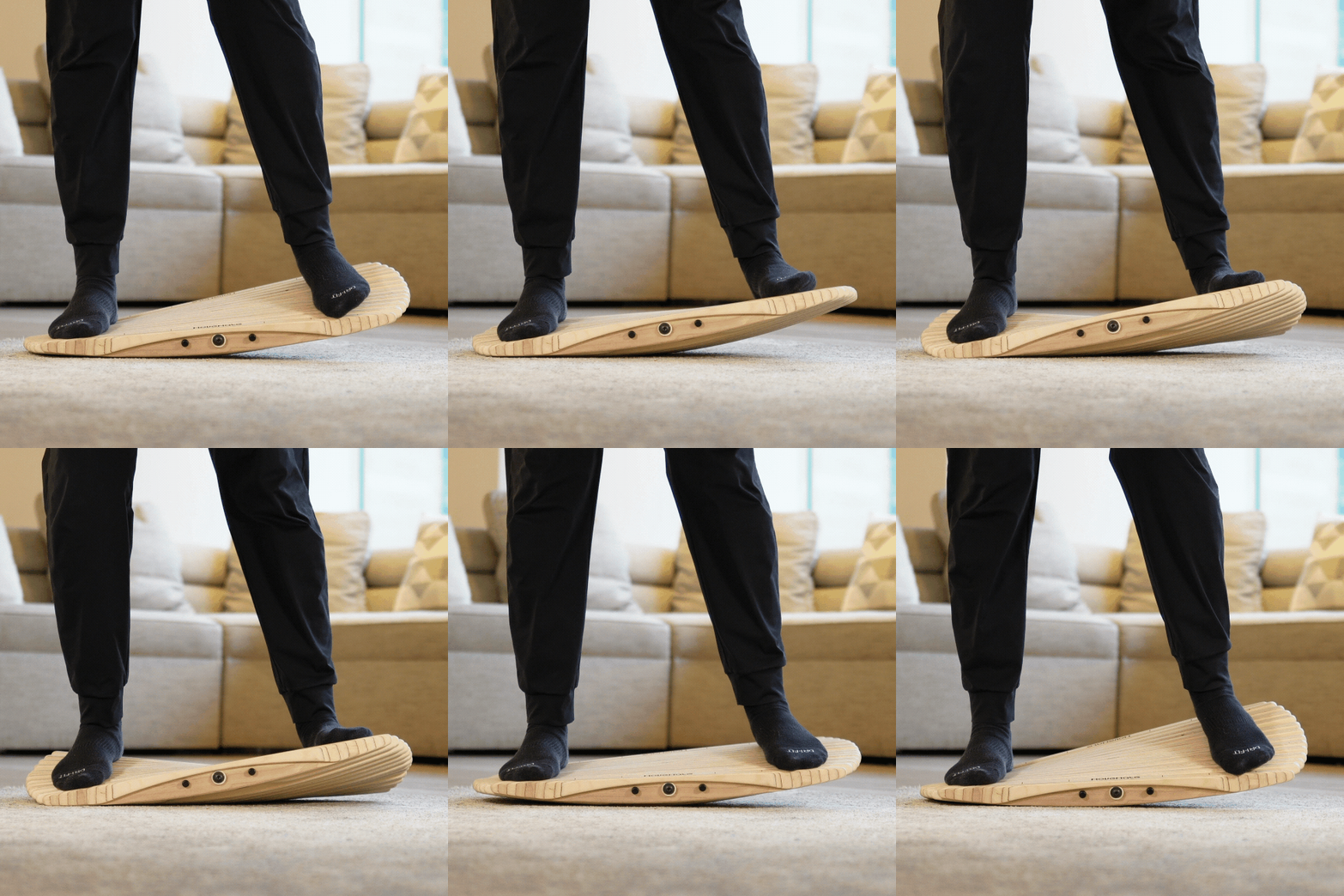
Lean & linger
Shift your weight to one side and hold. Flex the opposite ankle forward and back, then switch sides.
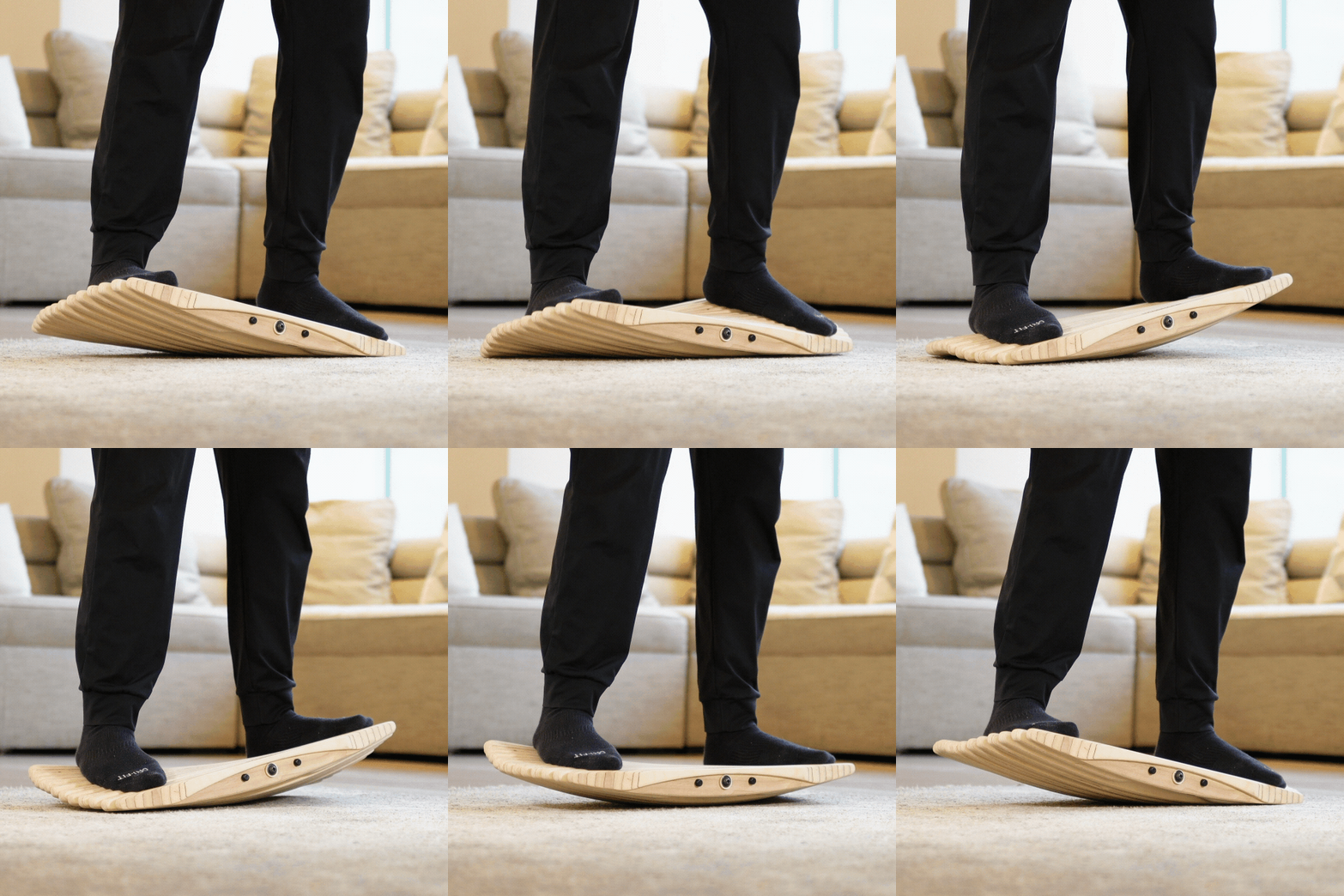
The wave
Shift your weight from side to side, landing through each heel and rolling towards your toes in a flowing motion.
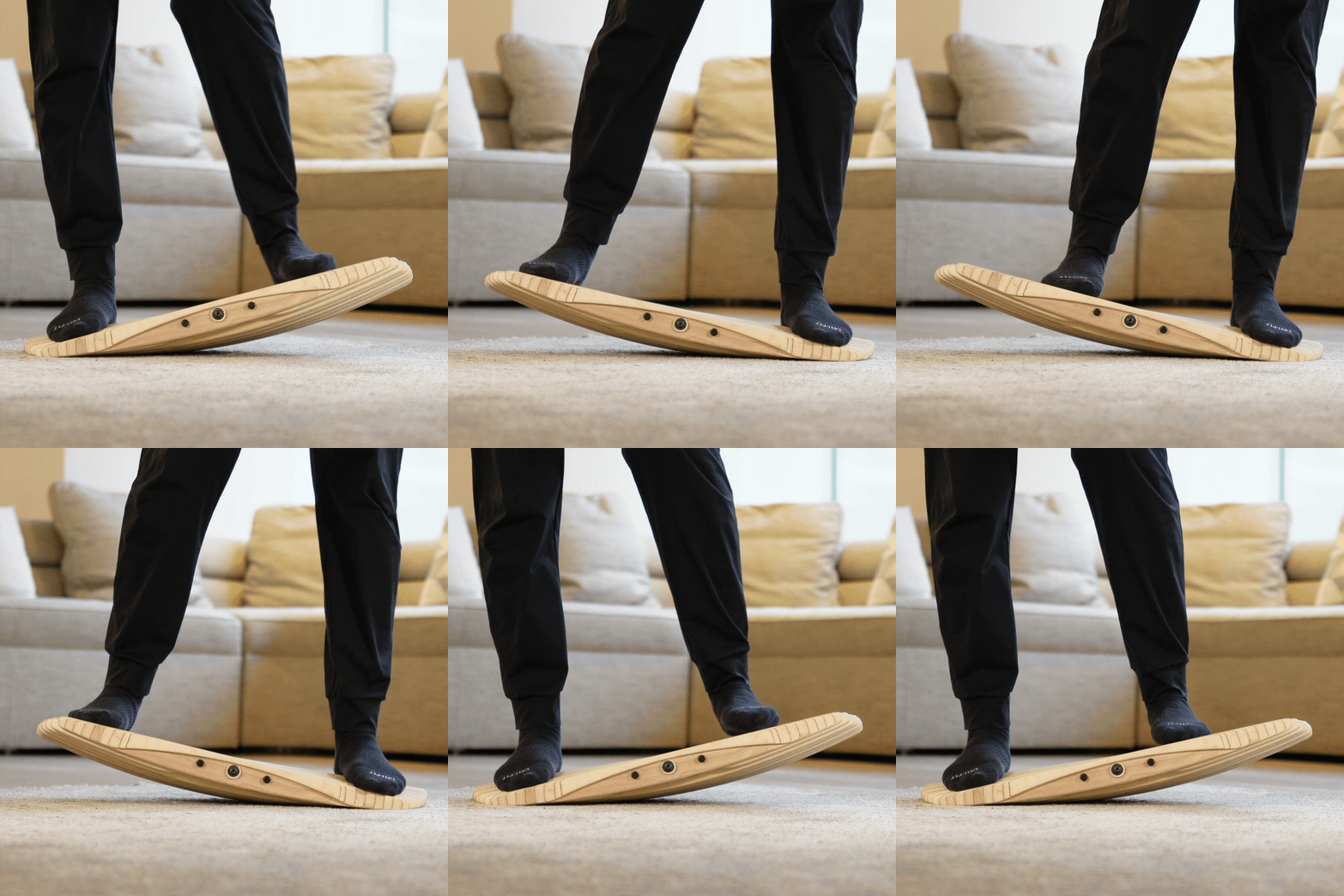
Tap dance
Shift your weight onto one foot. Tap the other foot towards the centre of the board, then back to its starting position.

The surfer
Twist the board partway to one side and pause, with one foot forward and the other back. Return and switch sides.
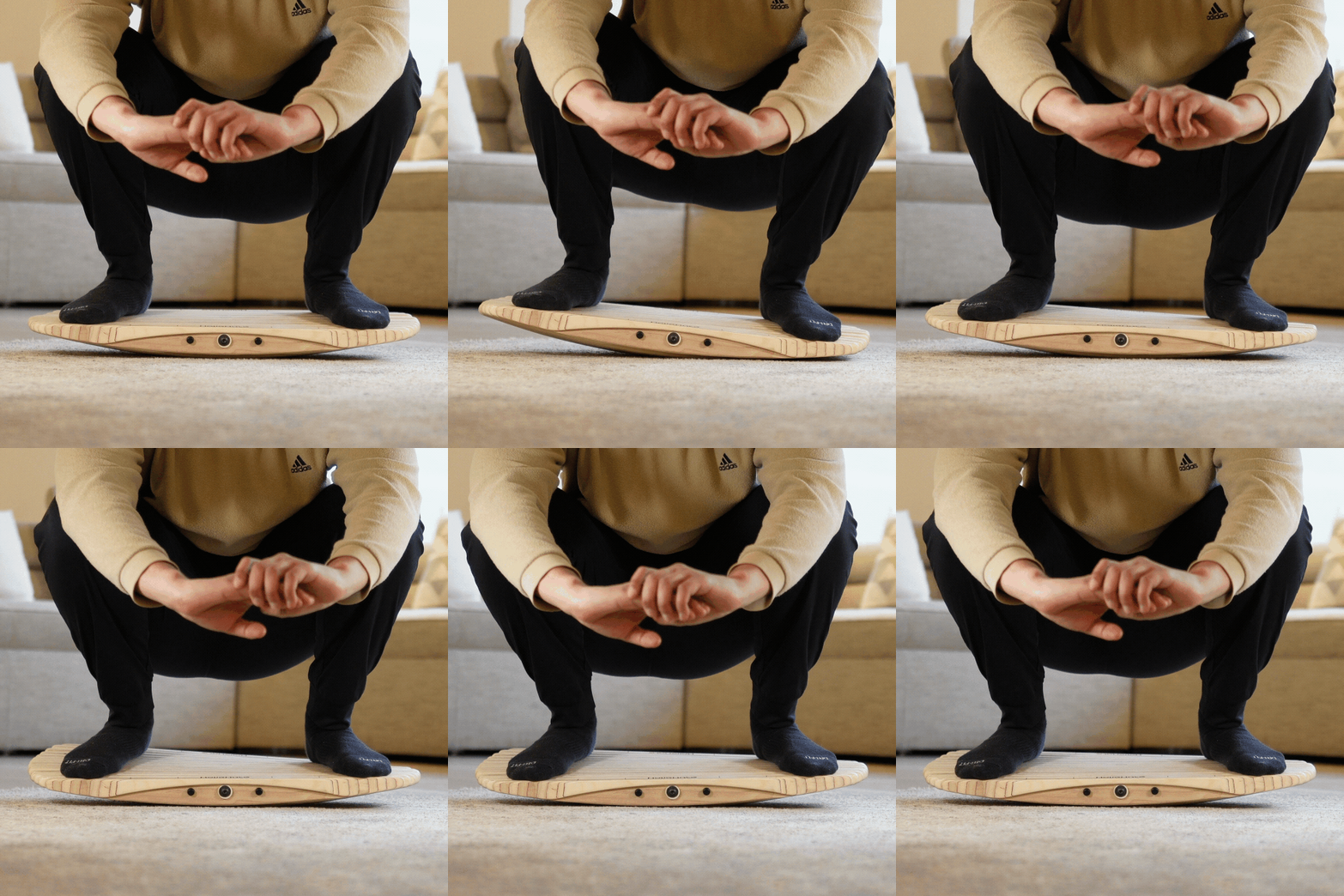
The slow dip
Keep your weight evenly spread across both feet. Lower your hips into a comfortable squat, gently shift side to side and then stand back up.
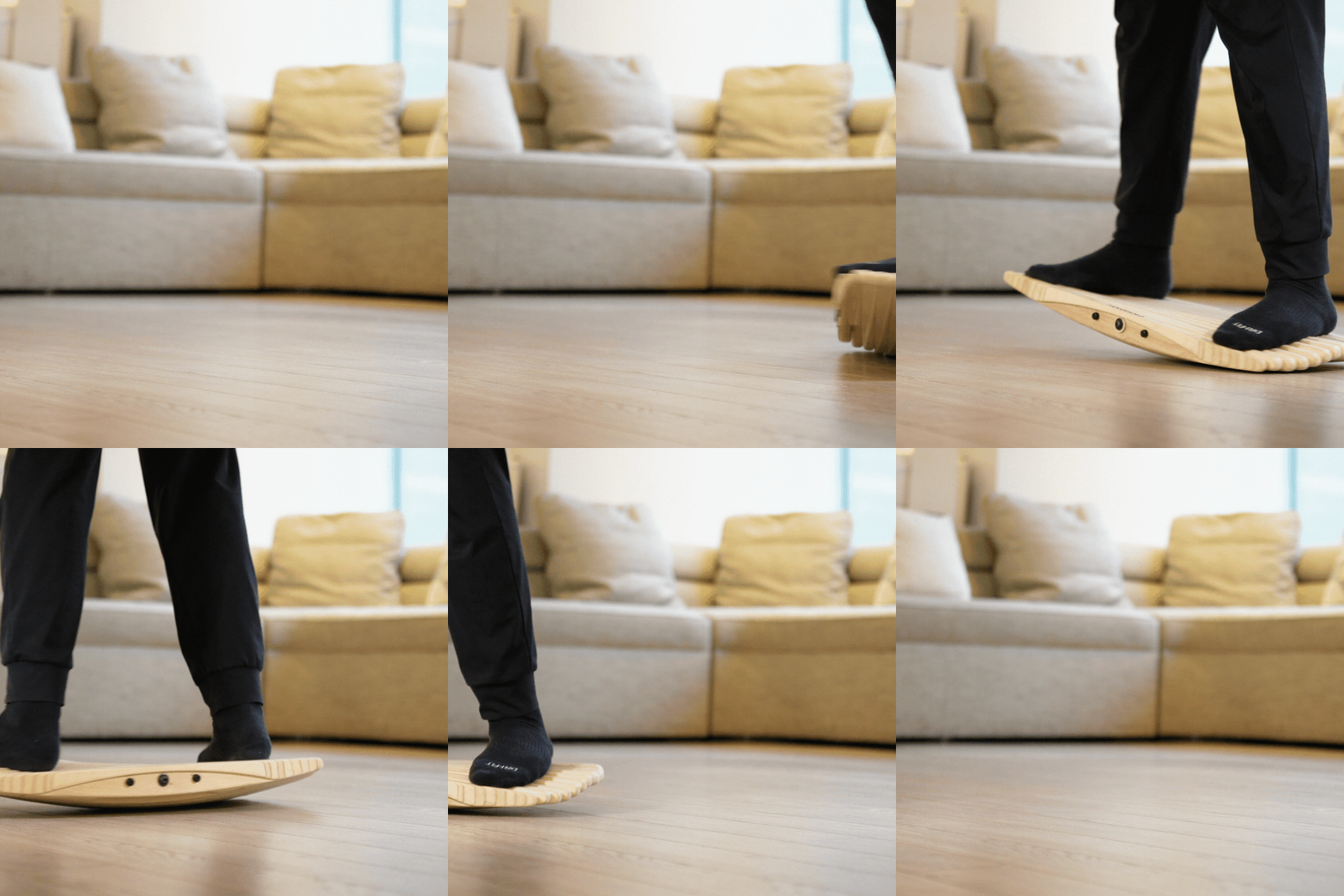
The shuffle
Shift your weight to one side to grip the floor, then twist the lighter side forward. Alternate sides to “walk” the board.
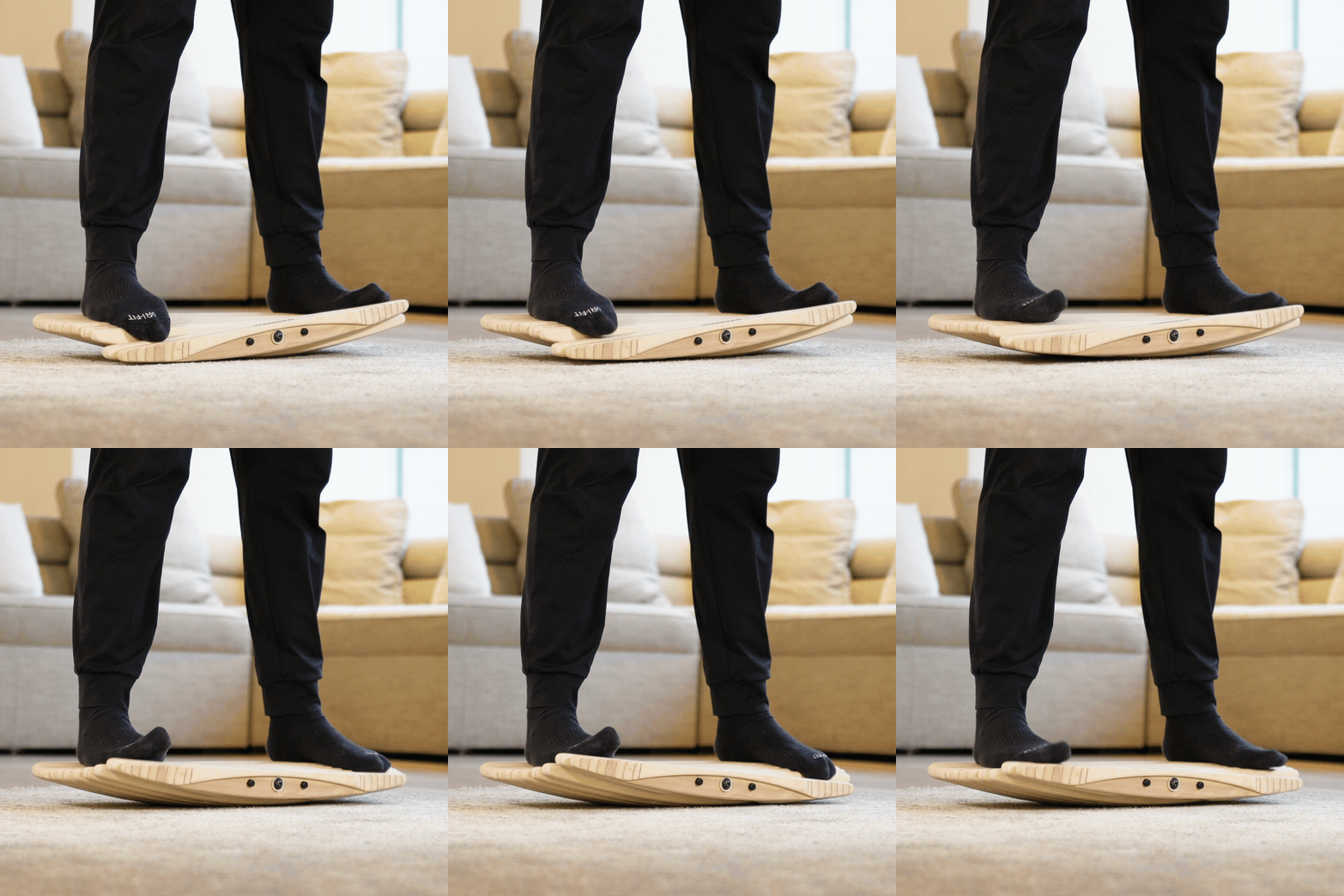
Toe play
Keep your heels down and lift and lower your toes, letting the slats move beneath them.
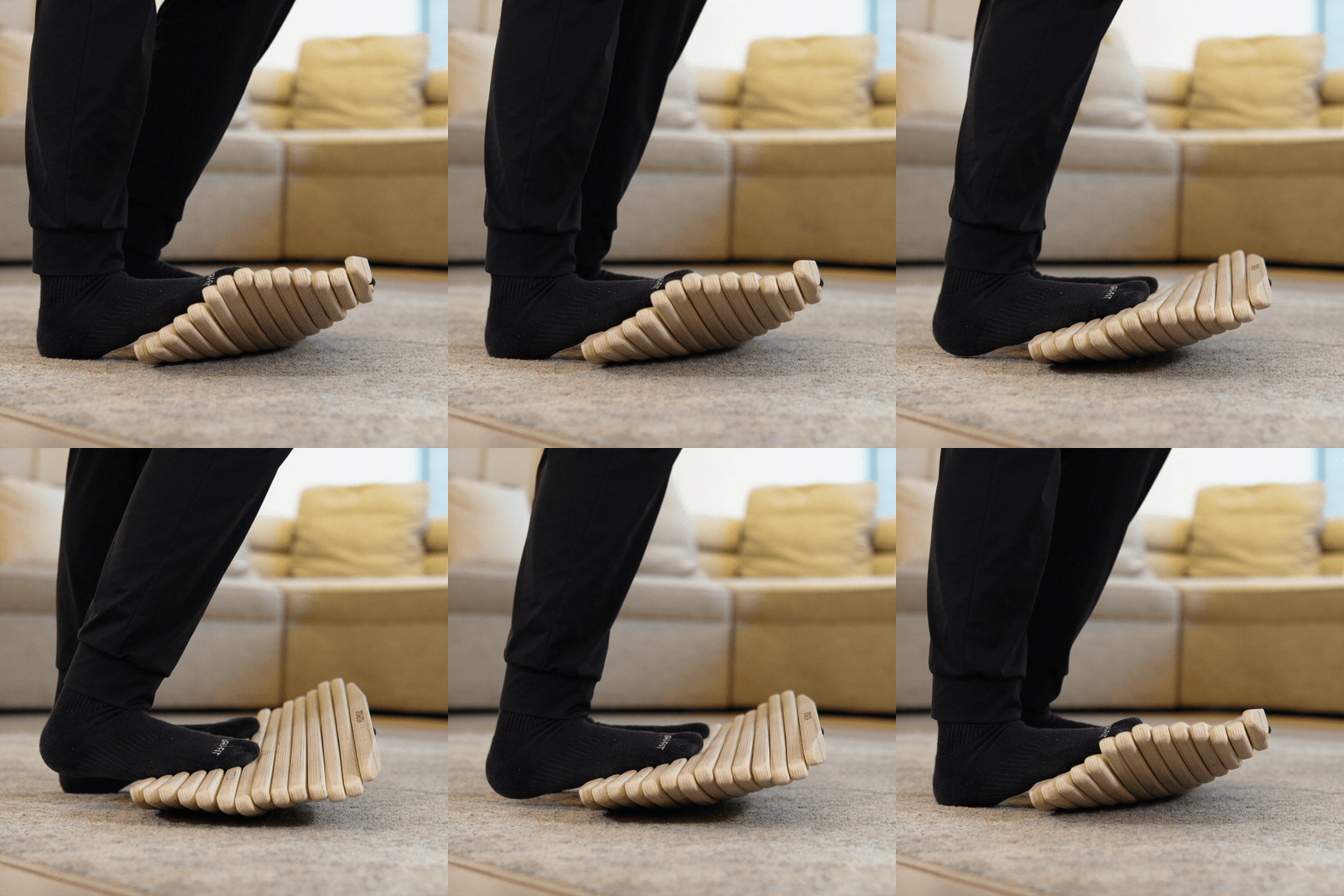
Calve stretch
Rest your heels on the floor behind the board, with your forefeet on top. Gently lean forward to stretch your calves.
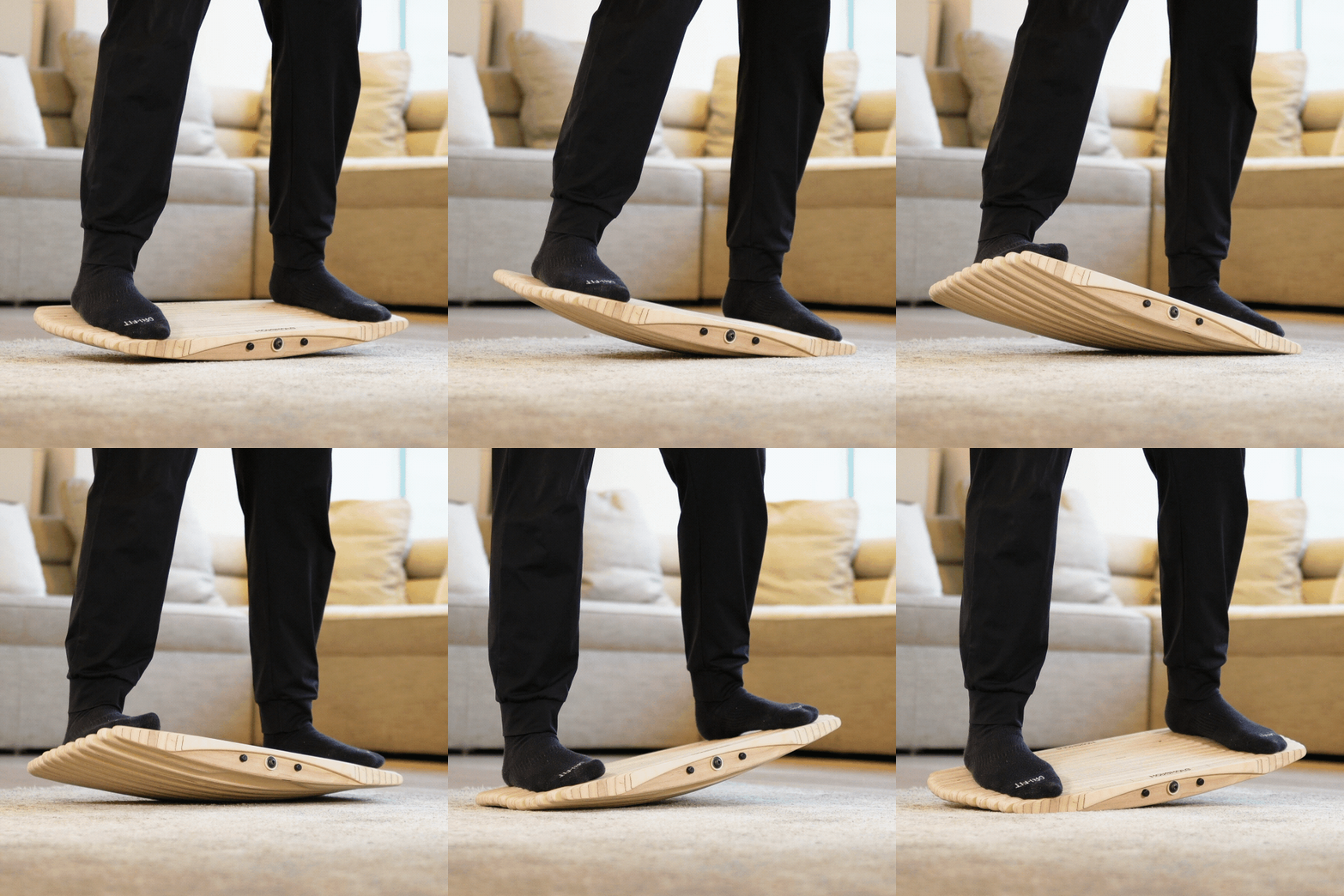
Around the world
Shift your weight in a slow circle, moving between your heels, toes and each side of the board. Reverse direction.
Explore other moments to move
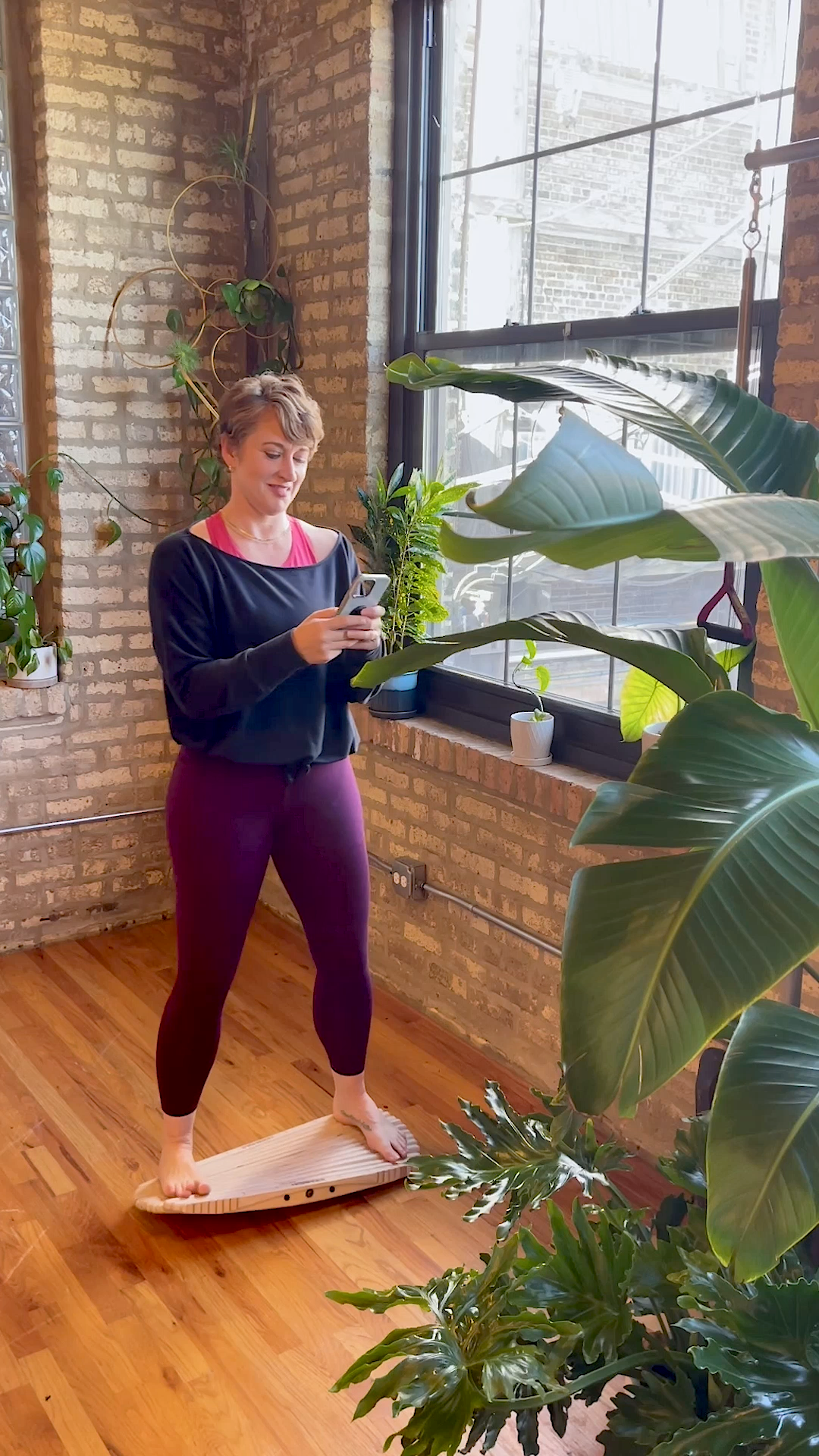
Pause
Take a movement break to reset between tasks.
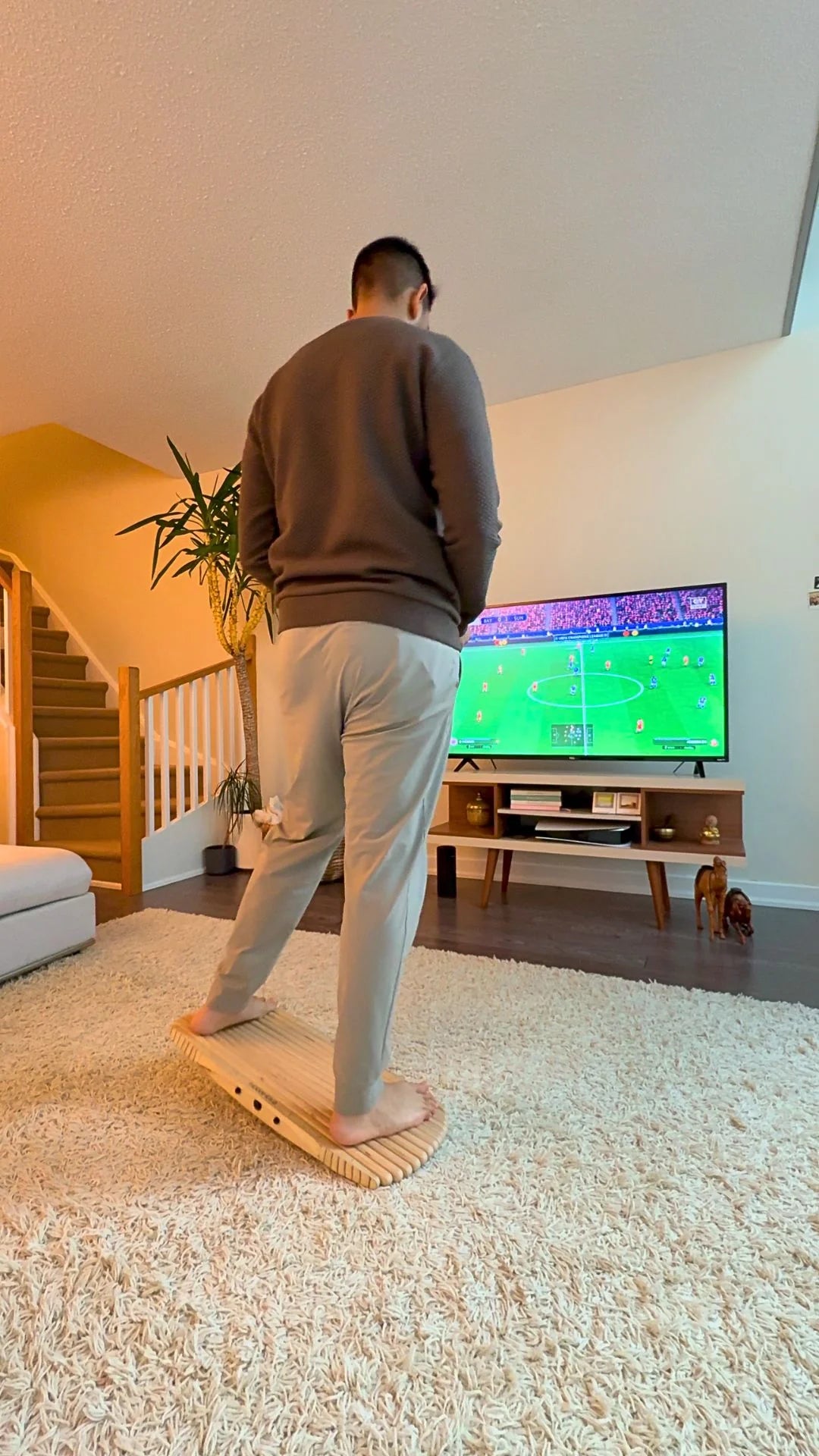
Unwind
While you watch TV, listen to music or play a game.
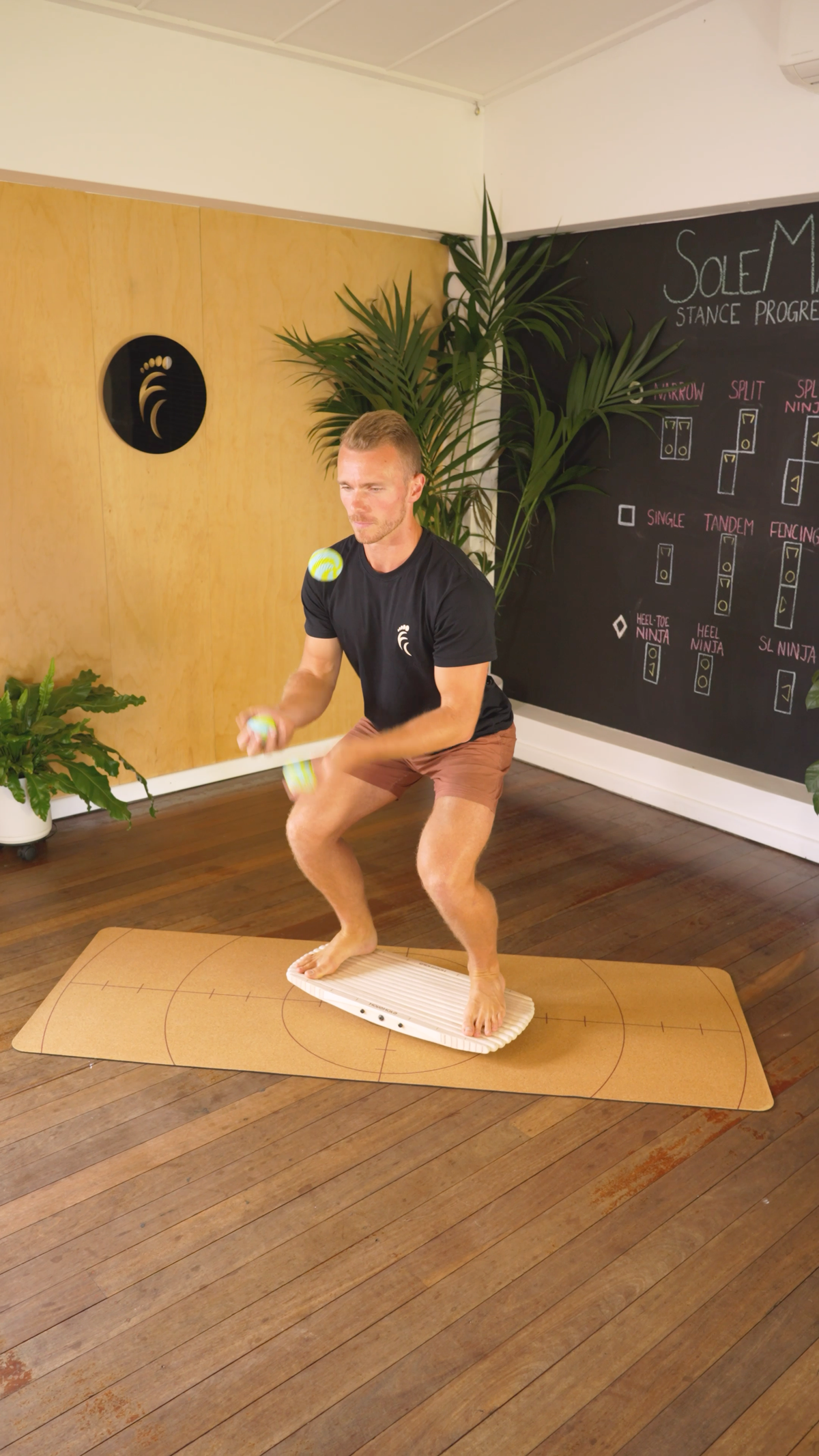
Practice
Warm up, stretch and add to exercises.
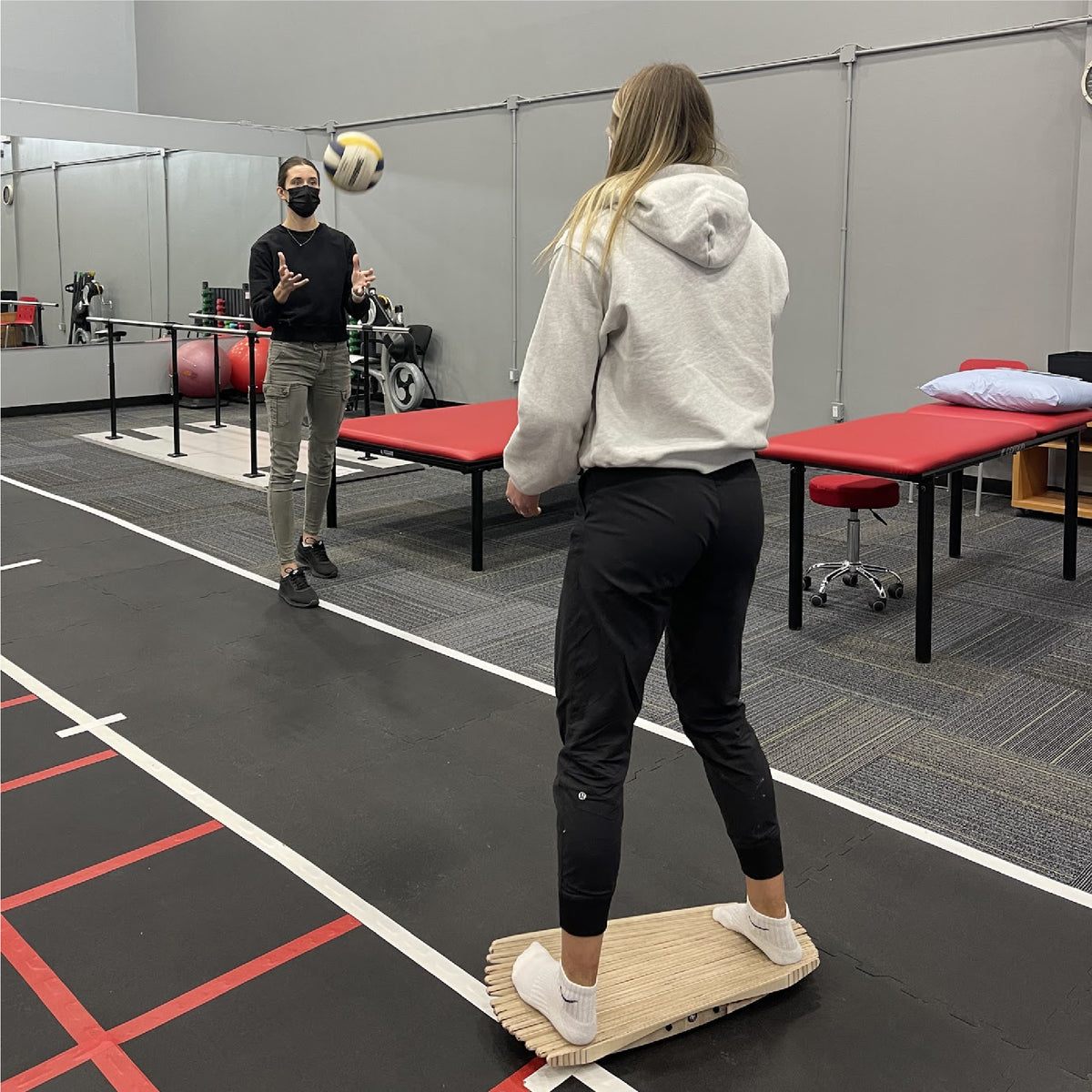
Recover
Rehab an injury and aid daily ongoing recovery.

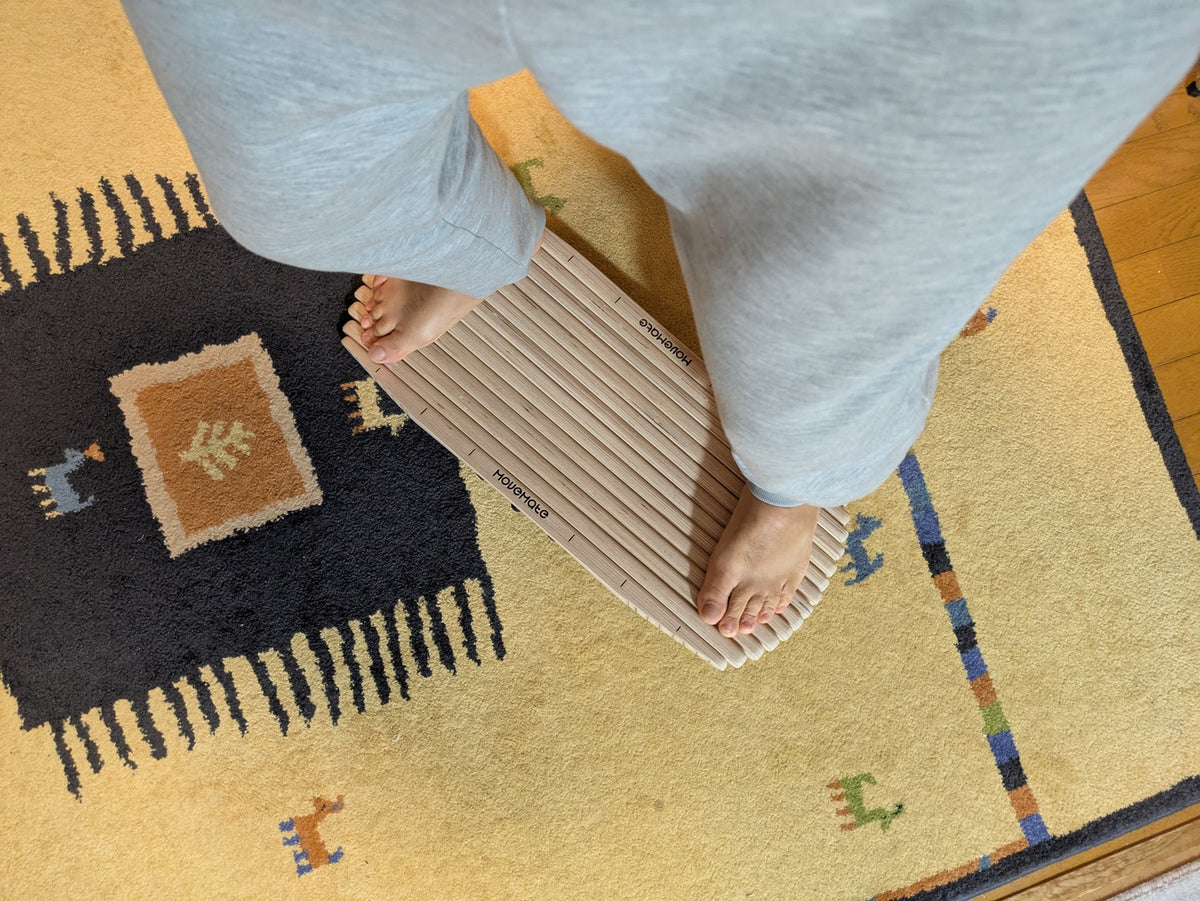
Move with awareness
Move slowly and pay attention to the sensations beneath your feet and through your body. Notice how your weight shifts and how different parts of you respond.
💡 Repeat the same movement and notice something new.
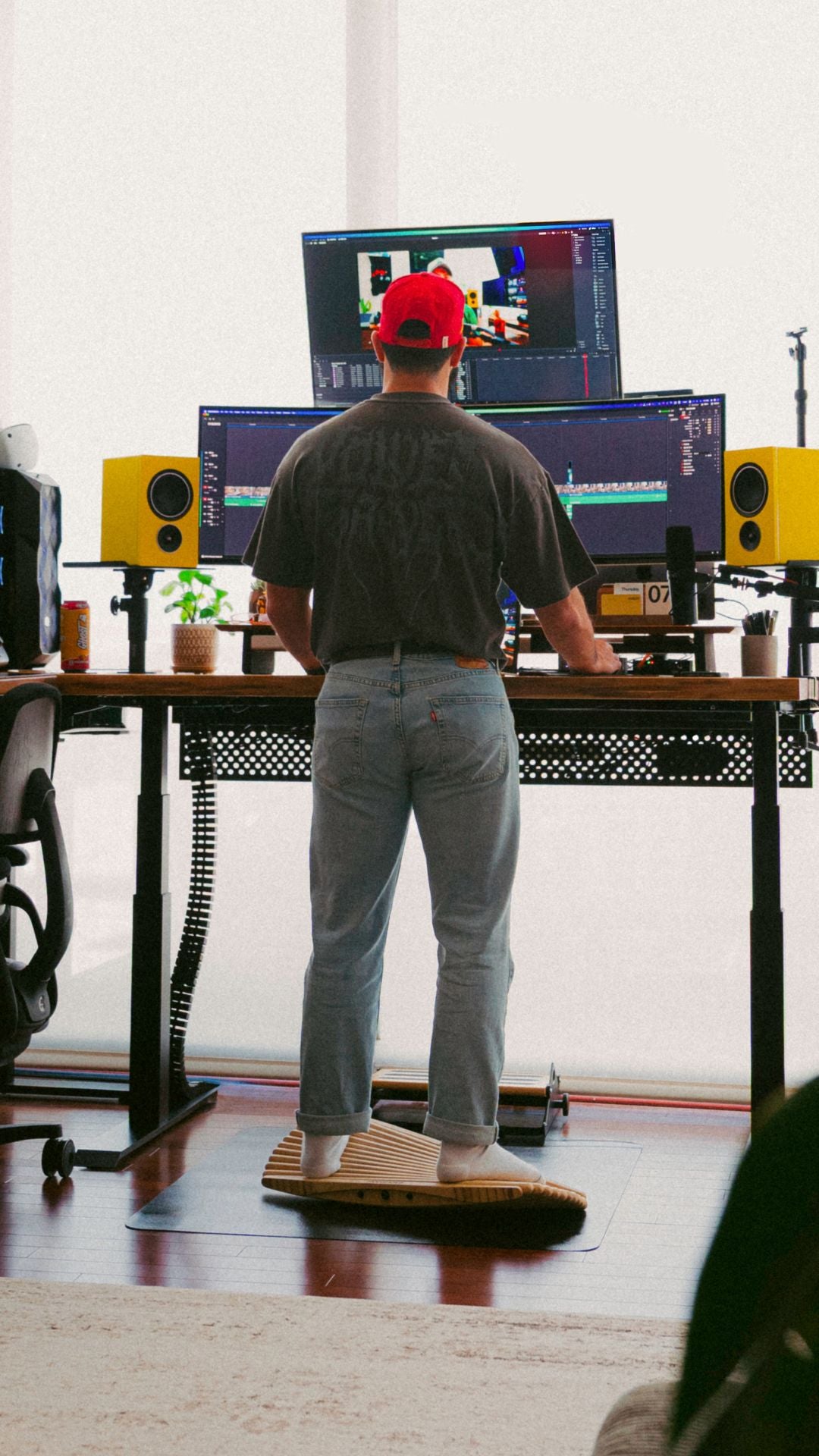
Try hands-free first
Try a call, some reading or a moment of thinking while you get familiar with the board. Add typing and other hands-on tasks once moving feels comfortable.
💡 Choose familiar activities to get comfortable at first.
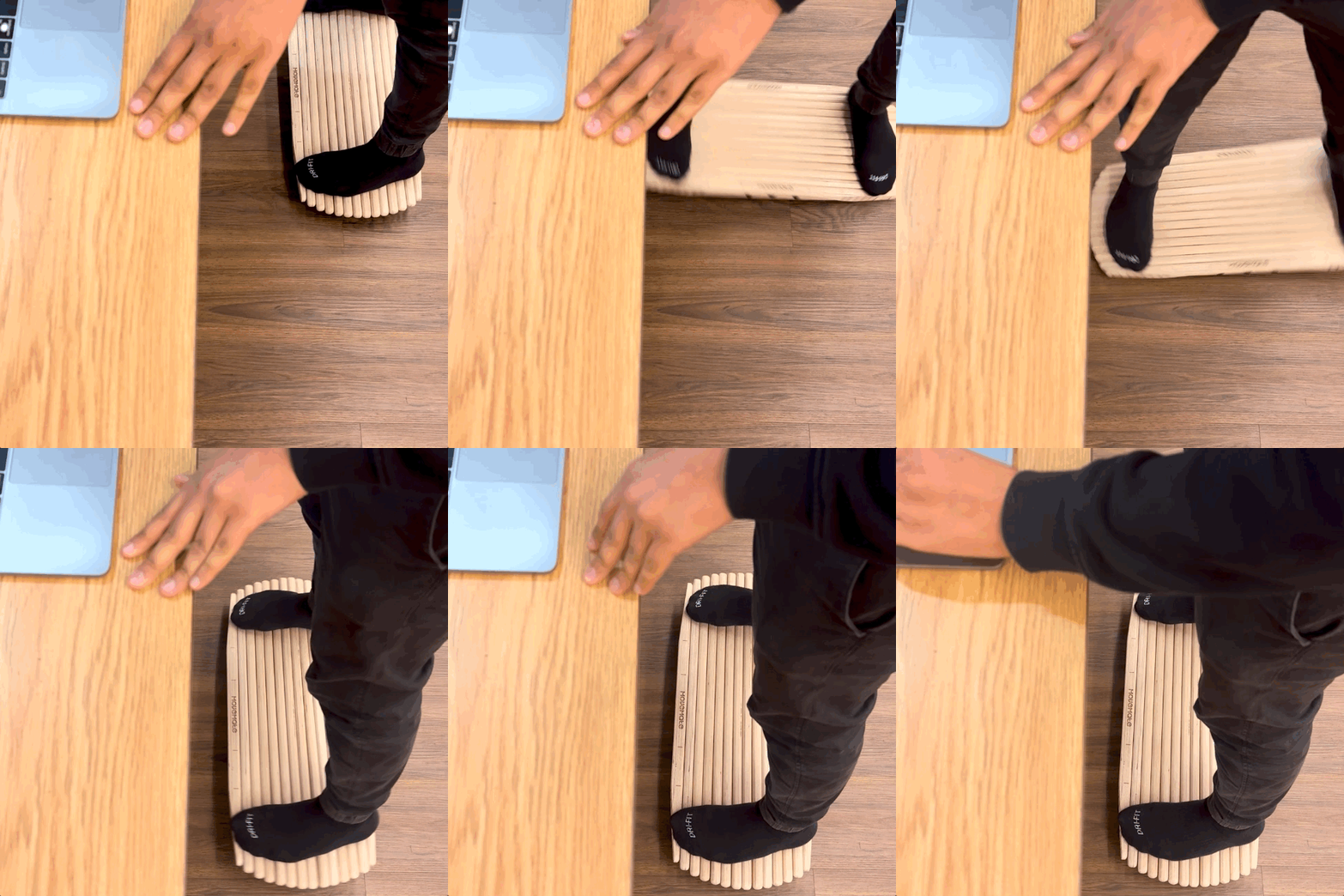
Reposition your board
Shift your weight to one side, then twist the lighter side towards your new position. Alternate sides to gently “walk” the board.
💡 Small turns help you adjust your position at your desk.
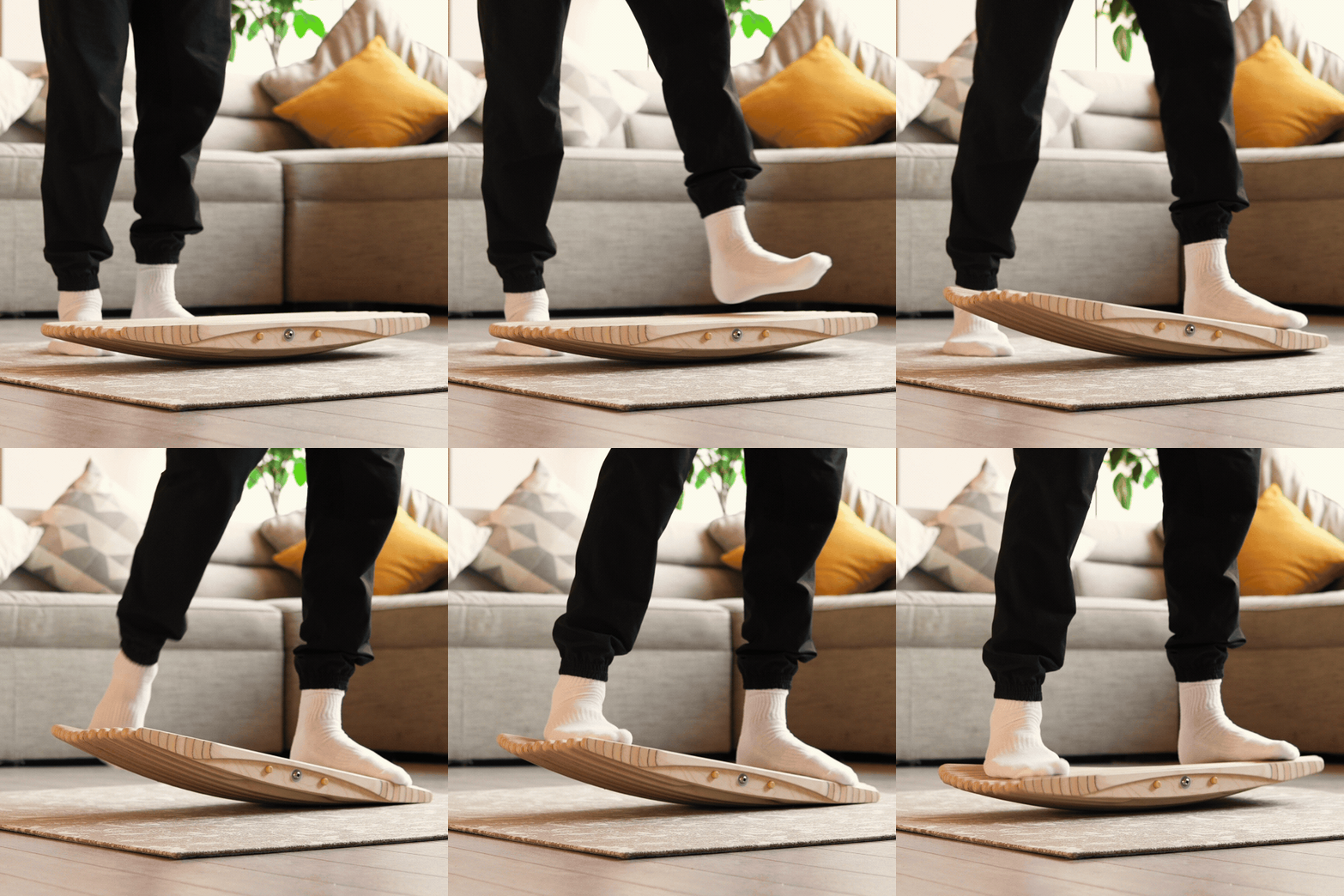
Build up gradually
Begin with 5-15 minutes, 2-3 times a day. Adjust gradually based on how you feel during and after each session.
💡 Link sessions to familiar moments and activities during your day.
Keep changing position
When pressure builds under your feet, try a gentle shift, a different movement, or a new foot position on the board.
💡 Give your feet time to adapt, and mix in other positions and movement.